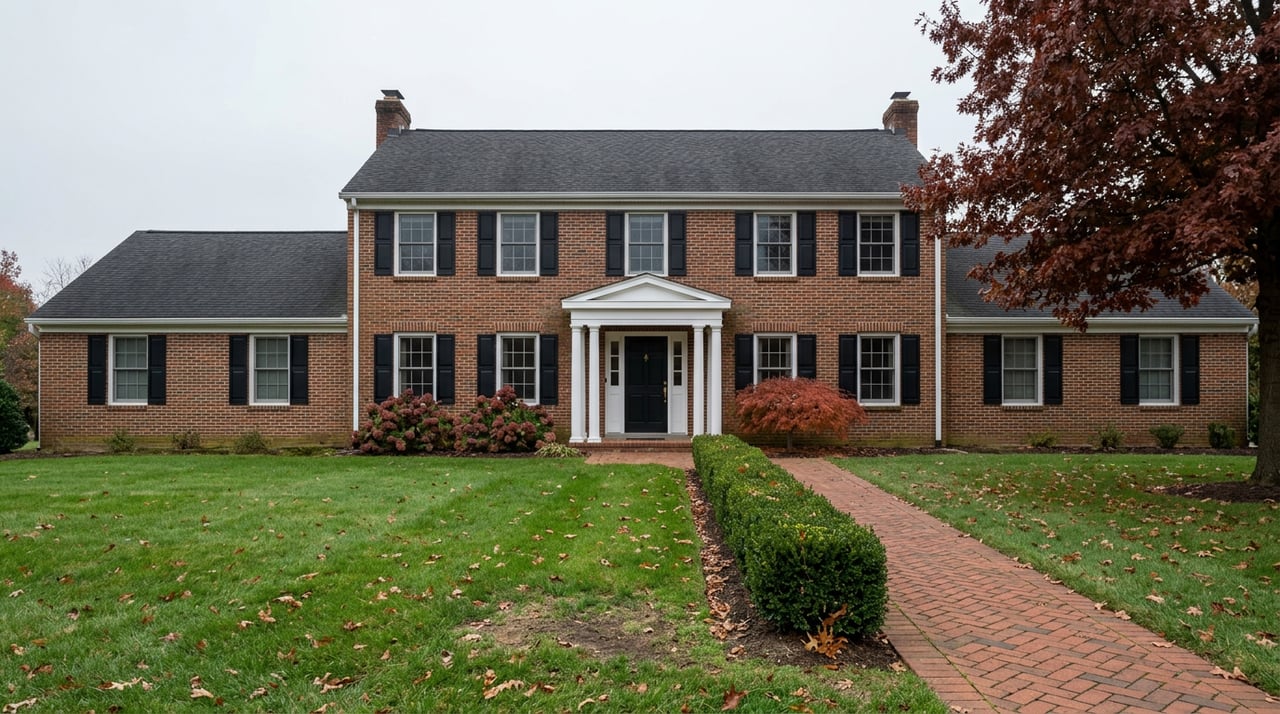
For Ten Weeks Each Fall, Lake Street Is Upper Saddle River's Downtown
August 27, 2026
August 27, 2026
Ask someone from Ridgewood or Westwood where the center of town is, and they can point to it. Ask the same question in Upper Saddle River, and the honest answer involves directions to Ramsey. The borough has no commercial strip, no cluster of storefronts that fills up on a Friday night, no single block that functions as a gathering place the way a traditional Main Street does. That absence isn't an oversight. It's the direct result of one-acre residential zoning that has shaped the town for generations, favoring deep lots and quiet roads over sidewalks and shopfronts.
For most of the year, that means Upper Saddle River's public life is scattered: a school event here, a library program there, nothing that adds up to a town center. But for about ten weeks each fall, something different happens. A stretch of Lake Street, barely a quarter mile long, ends up carrying the borough's largest fundraiser, its oldest surviving building, and a youth sports program that runs twice a week. None of it was planned as a package. It just landed there, on the same road, in the same season, and the effect is that Upper Saddle River gets something close to a downtown after all, just not a commercial one, and just not permanent.
The overlap is easiest to see laid out plainly.
| What | When | Where |
|---|---|---|
| Oktoberfest for USR Cares | A Saturday afternoon in early October, noon to 6 p.m. | Lions Park, 236 Lake Street |
| Racefaster youth track sessions | Tuesdays and Thursdays, September 8 through November 10, 2026 | Lions Park |
| Harvest Festival | Later in October, after Oktoberfest on the Historical Society's own calendar | Hopper-Goetschius House Museum, corner of Lake Street and East Saddle River Road |
Lions Park sits at 236 Lake Street. The Hopper-Goetschius House Museum sits where Lake Street meets East Saddle River Road, a few minutes' walk away, directly across from Elmer's Country Store. Two of the borough's biggest fall gatherings, plus a running youth program that spans both, all within sight of each other on a single road most residents drive past without thinking twice about.
Oktoberfest is the loud one. The Borough of Upper Saddle River and USR Cares put it on together, and it takes over Lions Park for a full afternoon: a German biergarten, international food vendors, a silent auction, live music, a hayride, a bounce house, and a dedicated senior tent with its own lunch and activities. It reads like a county fair scaled down to fit a single park, and every dollar it raises goes back into USR Cares' work supporting neighbors who need help, which is the kind of detail that explains why this event has outlasted plenty of flashier ones in nearby towns.
The event started as a straightforward Oktoberfest and was later widened into a celebration of international food and culture, with flags now placed throughout the grounds to reflect that shift. It's a small adjustment, but it says something about how the organizers think about the event: not as a fixed tradition frozen in place, but as something that keeps absorbing more of the community each year.
A few weeks later, the same stretch of road hosts something with a much longer memory. The Hopper-Goetschius House was built around 1739 by the Hopper family, making it the oldest surviving home in Upper Saddle River, predating the borough itself by well over a century. It was added to the National Register of Historic Places in January 1983, and it's been run as a museum by the Upper Saddle River Historical Society since the mid-1980s, after the last private owner's family donated it to the town.
The Historical Society's annual Harvest Festival turns the property into a working farm for a day: old-fashioned cider pressing, a blacksmith demonstration, open-hearth cooking, craft tables, tours through the one-room schoolhouse on the grounds, and a bluegrass band that plays under the name Growing Old Disgracefully. Admission runs five dollars for adults, with children, students under twelve, and Historical Society members getting in free. It's a low-key, low-cost afternoon, and it's scheduled on the Society's calendar right after Oktoberfest, which means the two events effectively bookend the same few weeks on the same road.
Standing on the lawn of a stone farmhouse older than the country, a few hundred yards from a biergarten with live music and a bounce house, is a strange kind of whiplash if you think about it too hard. Most residents probably don't. They just show up to both, because both are close enough to walk to if you live nearby.
While those two events bookend the season, Lions Park is doing something quieter the whole time. Racefaster's youth track program runs sessions at the park on Tuesdays and Thursdays from September 8 through November 10, 2026, giving kids ages five to fourteen roughly two months of practice on the same fields that will host a biergarten in the middle of the run. It's not a headline event. It's the kind of recurring, unglamorous program that keeps a park in regular use, and it means Lions Park isn't just the site of two big Saturdays. It's active twice a week for two full months, which is a different kind of civic function than a festival provides.
None of this is coordinated in any formal sense. The Borough and USR Cares run Oktoberfest. The Historical Society runs the Harvest Festival. Racefaster runs its own program independent of both. Nobody sat down and planned a fall season built around one road. But the absence of a commercial downtown seems to have pushed the borough's shared civic life onto its shared public land instead, which in Upper Saddle River means Lions Park and the historic corner just up the street from it.
The practical upshot for anyone living nearby is that fall in Upper Saddle River is more walkable than the rest of the calendar suggests. A resident on the Lake Street side of town can hit a youth track practice, a fundraiser with a hayride, and a 287-year-old farmhouse's harvest celebration without getting back in the car between any of them. That's not something the borough advertises, because it isn't really a plan. It's what happens when a town without a Main Street still needs somewhere for its public moments to land, and one road quietly ends up doing the job for about ten weeks a year.
If you're weighing what daily life looks like in a town like this, that kind of detail rarely shows up in a listing description, but it shapes how a place actually feels to live in. For a closer look at Upper Saddle River, or a private conversation about what's on the market in northern Bergen County right now, Cathy Bossolina is available to talk through it. Request a Private Consultation whenever you're ready.

Cathy Bossolina is Ridgewood’s top-producing individual real estate agent, consistently ranked #1 since 2020 and recognized as the #1 agent company-wide for Prominent Properties Sotheby’s International Realty in 2021. With more than a decade of experience and over $225 million in closed volume, Cathy offers discerning clients hands-on, white-glove service tailored to their unique needs. Known for her integrity, discretion, and deep knowledge of Ridgewood and surrounding towns, she leverages her strong community ties and Sotheby’s International Realty’s global network to deliver exceptional results. Her commitment to personalized service has earned her recognition in Bergen Magazine, RealTrends/Tom Ferry America’s Best, and the trust of repeat and referral clients throughout Bergen County and beyond.
📍 55 N. Maple Ave., Ridgewood, NJ 07450
📞 201.410.0642


Stay up to date on the latest real estate trends.
A Seller's Guide to Preparing Your Ridgewood, NJ, Home for Sale.
A Ridgewood, NJ, Guide to the Homebuyer FAQs That Shape Your Search.

What It Takes to Stage Your Ridgewood, NJ, Home for a Memorable Showing.

A Ridgewood, NJ, Homeowner's Guide to Improving the Air Quality of Your Home.
Cathy’s personalized service concentrates on limited clients with white-glove service. She is committed to representing her clients personally. Through a decade of service to individual clients and their families, she has developed a deep connection to the community and leverages those relationships to help put the client’s needs first, while protecting their privacy.