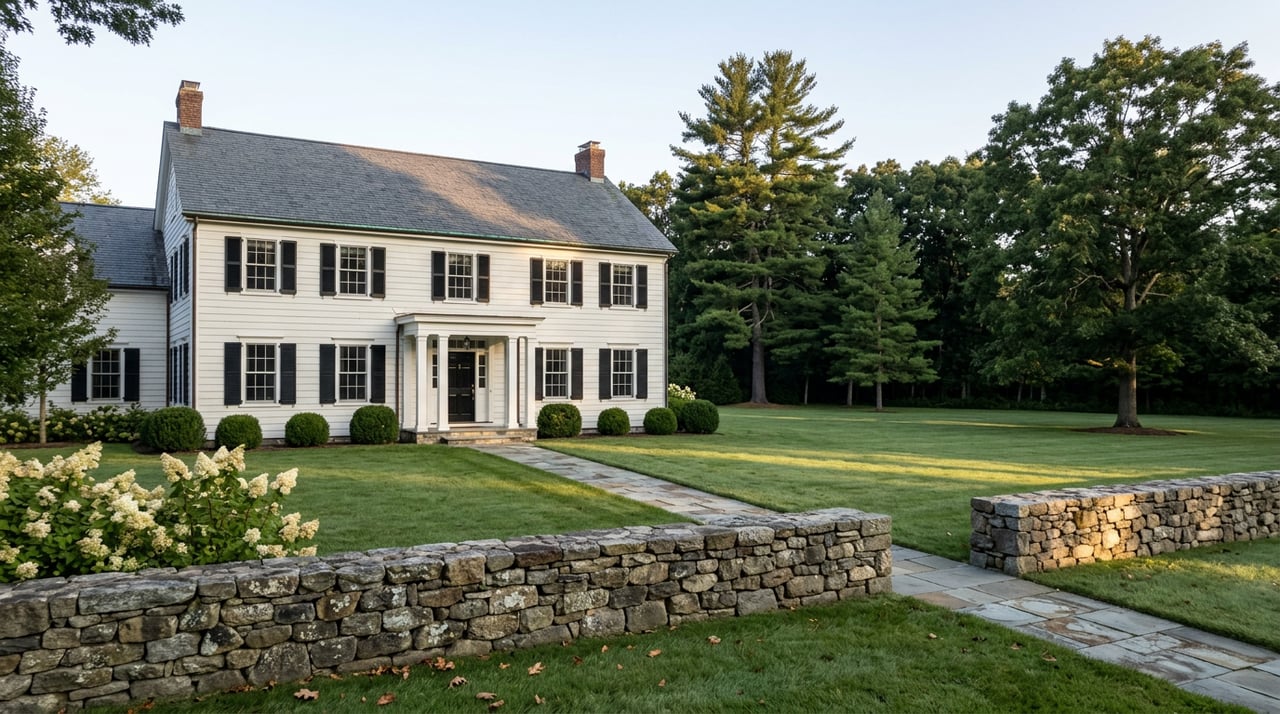
Franklin Lakes Runs on Two Separate Water Systems. Only One Shows Up in the Home Inspection.
September 10, 2026
September 10, 2026
A buyer touring a home in Franklin Lakes will see a standard home inspection scheduled, a septic company mentioned somewhere in the contract, and assume that covers the property's water and waste. It does not. Franklin Lakes runs two parallel compliance tracks for every septic-and-well property, administered by two different offices, on two different timelines, and the one that catches people off guard at closing is rarely the one they were watching.
Public sewer in Franklin Lakes reaches the downtown business district and stops. Beyond that, on lots that run up to about three acres, homes manage their own wastewater and draw their own drinking water. That is not unusual for large-lot Bergen County boroughs. What is unusual, and what a buyer moving from a sewered town will not expect, is that the septic system and the well are regulated separately, inspected separately, and can each independently delay a closing for reasons that have nothing to do with the other.
Ask most buyers what a septic inspection covers and they will describe a single event: someone comes out, checks the tank, checks the drain field, writes a report, done. In Franklin Lakes, that report tells you nothing about the well.
The septic side runs through the Borough's own Board of Health, which draws its public-health staff from the Northwest Bergen Regional Health Commission. Permits, plan review, and the transfer inspection itself are Borough business.
The well side runs through New Jersey's statewide Private Well Testing Act, in effect since 2002, which requires a certified lab to test untreated well water for dozens of contaminants and route the results through Bergen County's health department as well as the state. It is a completely separate legal requirement, with its own lab, its own paperwork, and its own timeline, and it is easy to schedule the septic inspection, feel like the box is checked, and only remember the well test when a title company asks for it two weeks before closing.
Here is how the two tracks actually compare:
| Septic Track | Well Track | |
|---|---|---|
| Who regulates it | Franklin Lakes Board of Health, staffed via Northwest Bergen Regional Health Commission | State law (Private Well Testing Act), with Bergen County handling well-test intake |
| What triggers it | Real property transfer inspection | Sale of any property on a private well |
| What's checked | Tank, baffles, distribution box, drain field | Up to several dozen water quality parameters, including uranium in Bergen County specifically |
| Typical lead time | Scheduled once contract is in hand | Results must be reviewed by both parties before closing, commonly well before the closing date |
| Typical cost | Roughly $500 to $2,000 for the inspection | Roughly $1,200 to $1,500 for certified lab testing |
| Common failure mode | Cesspool identified, must be replaced before transfer | Contaminant exceeds a safe level, requiring treatment or negotiation |
Neither system is optional. Neither one substitutes for the other. A property can sail through septic and still stall on the well test, or the reverse, and because the two run on separate clocks, the failure often surfaces later in the process than either side expects.
Franklin Lakes has a provision that most neighboring towns do not bother with. The company that inspects a septic system as part of a resale cannot also be the company hired to repair it. Only installers licensed by the Board of Health may perform the repair work, and the inspection and the repair are treated as two separate roles for a given sale.
That firewall protects buyers from an inspector who has a financial incentive to find problems that only they can fix. It also means that if a system fails inspection, you are not looking at a single phone call and a quick patch. You are looking at a second company for the repair, a permit from the Board of Health for the work itself, and in some cases a re-inspection before the sale can close. Every step in that sequence, including replacing something as small as a lid, riser, or baffle, needs its own permit.
If your timeline assumed "inspect, fix, close," build in the extra week or two that a second contractor and a permit cycle actually require.
Under New Jersey's septic code, a cesspool identified during a real estate transfer inspection must be replaced with a conforming septic system before the property changes hands. That rule applies specifically to cesspools, not to older but code-compliant septic systems, which are not required to be upgraded simply because they predate current standards. The distinction matters because "old" and "noncompliant" are not the same thing, and a seller with a decades-old but properly functioning system is not automatically facing a replacement.
One detail that surprises buyers planning renovations: if a home has, or will have, a garbage disposal, the septic system serving it must be designed with 50 percent additional tank volume and 25 percent more disposal field area. For a buyer eyeing an older Franklin Lakes property with plans for a larger kitchen and modern appliances, that is a sizing question worth raising before the offer, not after the disposal is installed.
Franklin Lakes has real surface water to protect, including Franklin Lake, Shadow Lake, and Ho-Ho-Kus Brook, along with the Borough's own Nature Preserve. Any disposal field has to sit at least 50 feet from a watercourse or wetland, and work near wetlands or flood-prone ground can trigger state Freshwater Wetlands and Flood Hazard Area permits on top of the Borough's own rules.
For a buyer whose dream lot backs up to the lake or the brook, that setback is not a formality. It often rules out a simple gravity-fed drain field and steers the design toward a pressure-distribution, mound, or aerobic treatment unit system instead, each of which costs more and takes longer to permit than a standard field.
Franklin Lakes attracts buyers who want to replace an aging structure with new construction on a large, established lot. If that is the plan, know that the Building Department will not issue a demolition permit until the Board of Health has issued an abandonment permit for the existing septic system, scheduled its own inspection, and confirmed pumping receipts showing the tank was properly emptied. It is a sequence, not a single form, and skipping ahead on the demolition timeline without lining up the septic abandonment first is a common way to lose weeks.
None of this is a reason to avoid Franklin Lakes. It is a reason to start earlier than you would in a sewered town. A seller who orders the septic inspection and the well test in the same week, rather than treating one as an afterthought, gives themselves time to address a failed cesspool, a contaminant exceedance, or a sizing mismatch on their own schedule instead of the buyer's deadline. A buyer who asks, on day one, "who inspected the septic, and separately, has the well been tested under the PWTA" is asking the question that actually protects the deal.
For a property in this price range, on land this valuable, the paperwork is not a footnote. It is the difference between a closing that happens on schedule and one that reopens negotiations in its final weeks.
Is a septic inspection legally required to sell a home in Franklin Lakes? There is no blanket mandate to inspect simply because a home is listed. In practice, buyers, lenders, and attorneys routinely require one, and if a cesspool turns up during that inspection, state rule requires it to be replaced before the sale closes.
Does passing the septic inspection mean the well is fine too? No. The well is a separate legal requirement under the state's Private Well Testing Act, with its own certified lab, its own contaminant list, and its own review process that both buyer and seller must complete before closing.
Who do I actually call, the Borough or the county? For septic permits and plan review, the Borough's Board of Health is where the paperwork lives, supported by the Northwest Bergen Regional Health Commission. For the well test, results move through a state-certified lab and are shared with Bergen County's health department as well as the state.
Franklin Lakes rewards buyers and sellers who understand its systems before they sign anything, not after. If you are weighing a purchase or preparing to list a property here, Cathy Bossolina has spent years guiding clients through exactly this kind of estate-property detail. Request a private consultation to talk through your timeline before it becomes someone else's deadline.

Cathy Bossolina is Ridgewood’s top-producing individual real estate agent, consistently ranked #1 since 2020 and recognized as the #1 agent company-wide for Prominent Properties Sotheby’s International Realty in 2021. With more than a decade of experience and over $225 million in closed volume, Cathy offers discerning clients hands-on, white-glove service tailored to their unique needs. Known for her integrity, discretion, and deep knowledge of Ridgewood and surrounding towns, she leverages her strong community ties and Sotheby’s International Realty’s global network to deliver exceptional results. Her commitment to personalized service has earned her recognition in Bergen Magazine, RealTrends/Tom Ferry America’s Best, and the trust of repeat and referral clients throughout Bergen County and beyond.
📍 55 N. Maple Ave., Ridgewood, NJ 07450
📞 201.410.0642


Stay up to date on the latest real estate trends.

A Seller's Guide to Preparing Your Ridgewood, NJ, Home for Sale.

A Ridgewood, NJ, Guide to the Homebuyer FAQs That Shape Your Search.

What It Takes to Stage Your Ridgewood, NJ, Home for a Memorable Showing.
Cathy’s personalized service concentrates on limited clients with white-glove service. She is committed to representing her clients personally. Through a decade of service to individual clients and their families, she has developed a deep connection to the community and leverages those relationships to help put the client’s needs first, while protecting their privacy.